Mobile Darkroom · Tutorials

The Digital Darkroom

Before there were sliders, there was craft: the zone system, dodging and burning, paper grades, toning. This series takes the classic darkroom process as its thread — and retraces each technique step by step in Mobile Darkroom.

The exercises use historical black-and-white photographs and the built-in RAW sample from the Zugspitze. Each chapter identifies its image source.
  1. Chapter 1

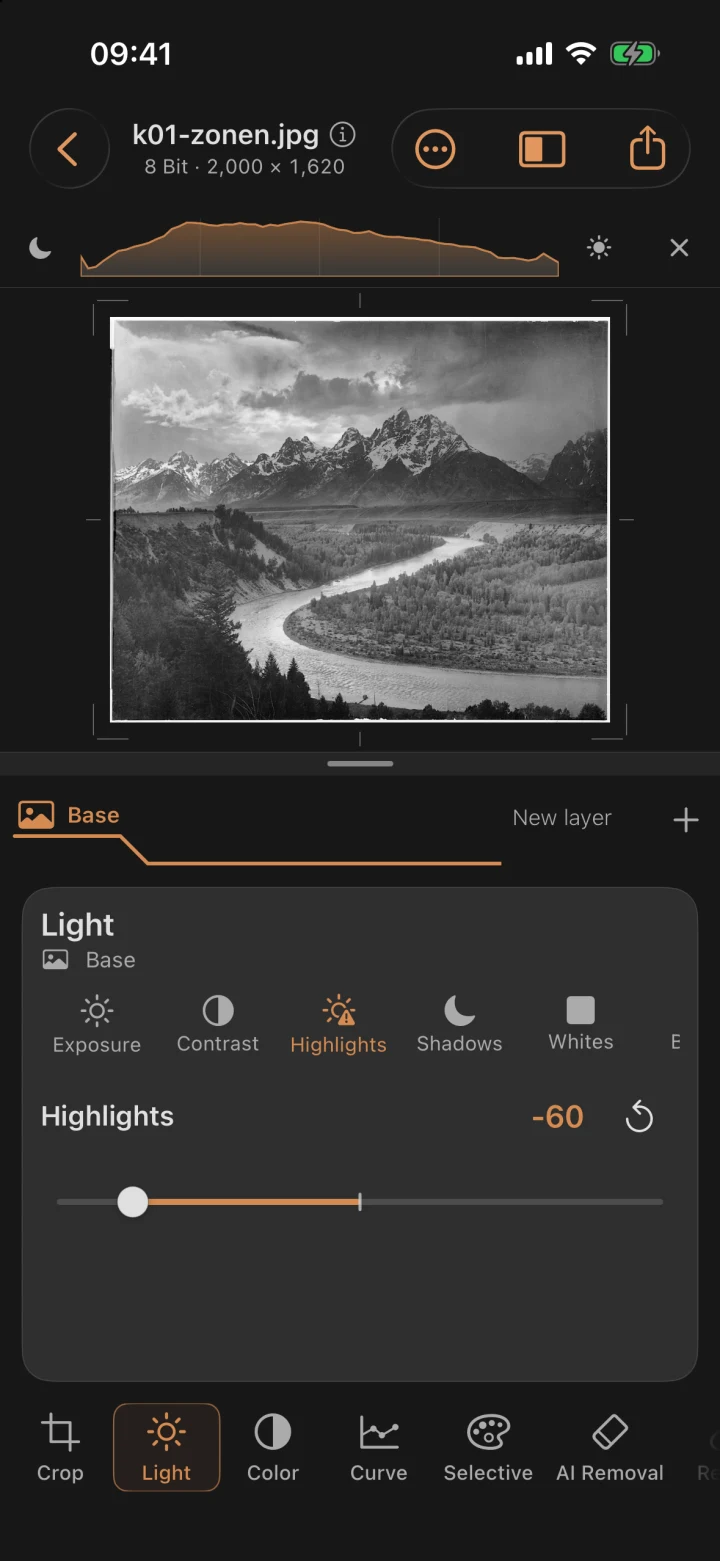
    Reading the Negative

    Before you touch a single slider, decide where the tones should land. The zone system turns guesswork into a craft.

    Zone system & previsualization

  2. Chapter 2

    Dodge & Burn

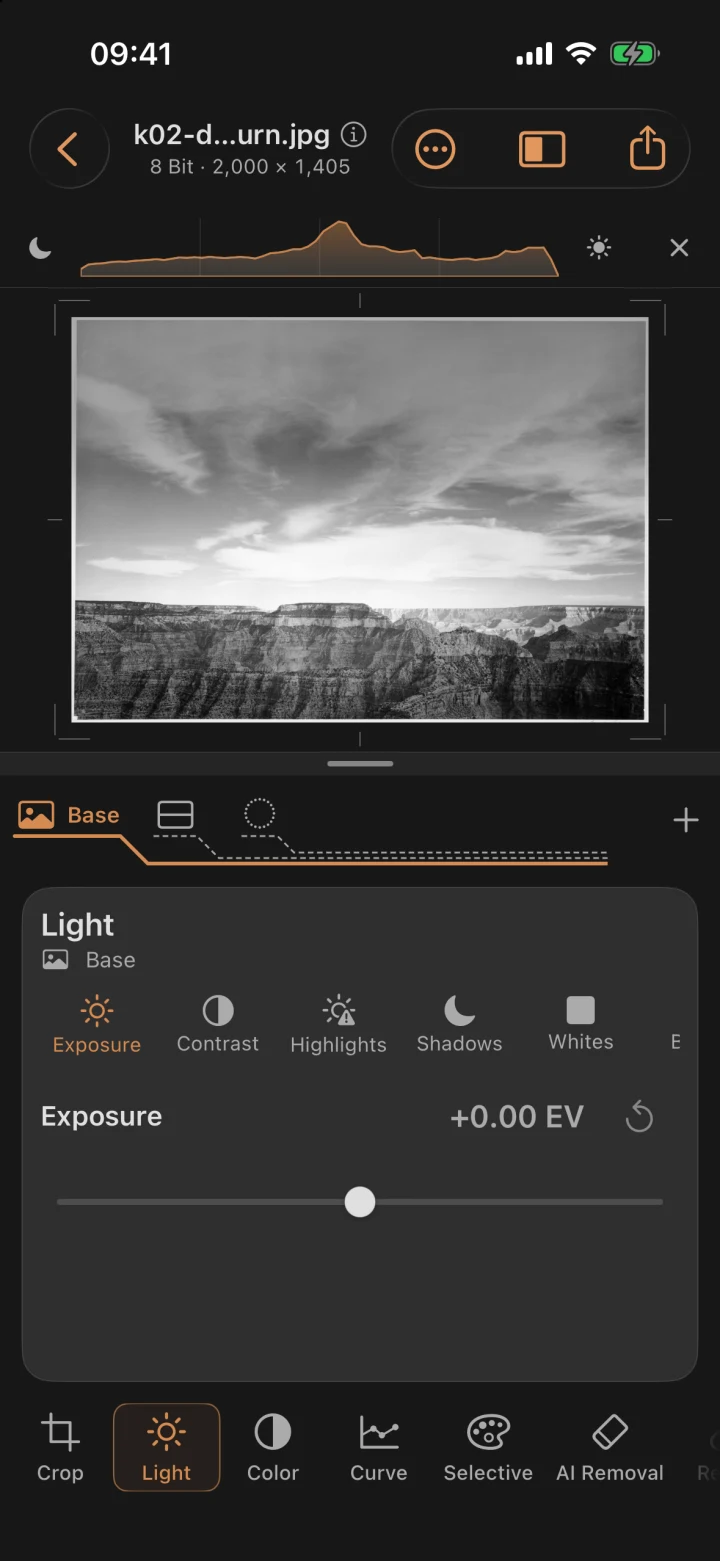
    Under the enlarger, hands and paper masks shaped the light. Today a mask does it — the gesture stays the same.

    Dodge & burn at the enlarger

  3. Chapter 3

    Paper Grades

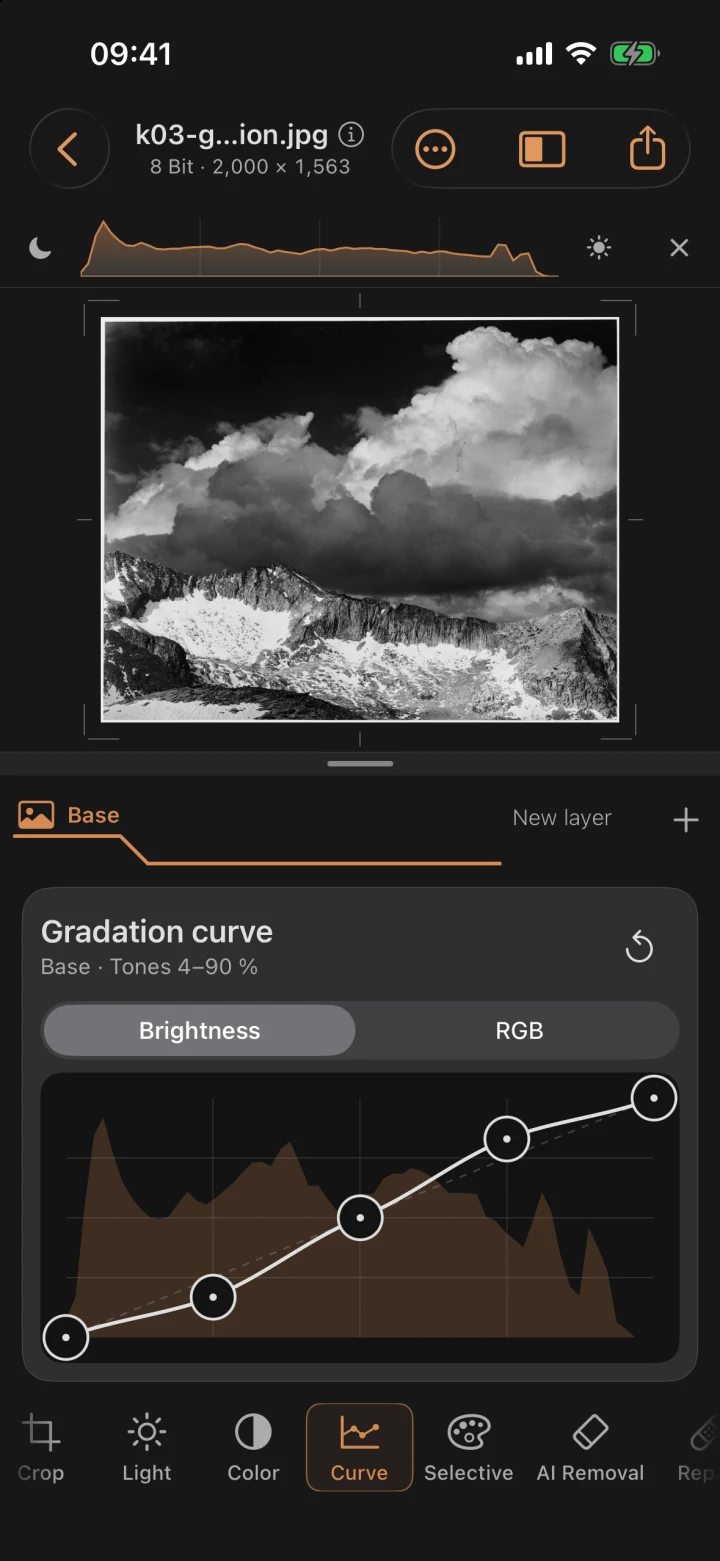
    Paper came in grades from 0 to 5. The tone curve can do both — and every grade in between.

    Paper grades & multigrade printing

  4. Chapter 4

    The Graduated ND Filter

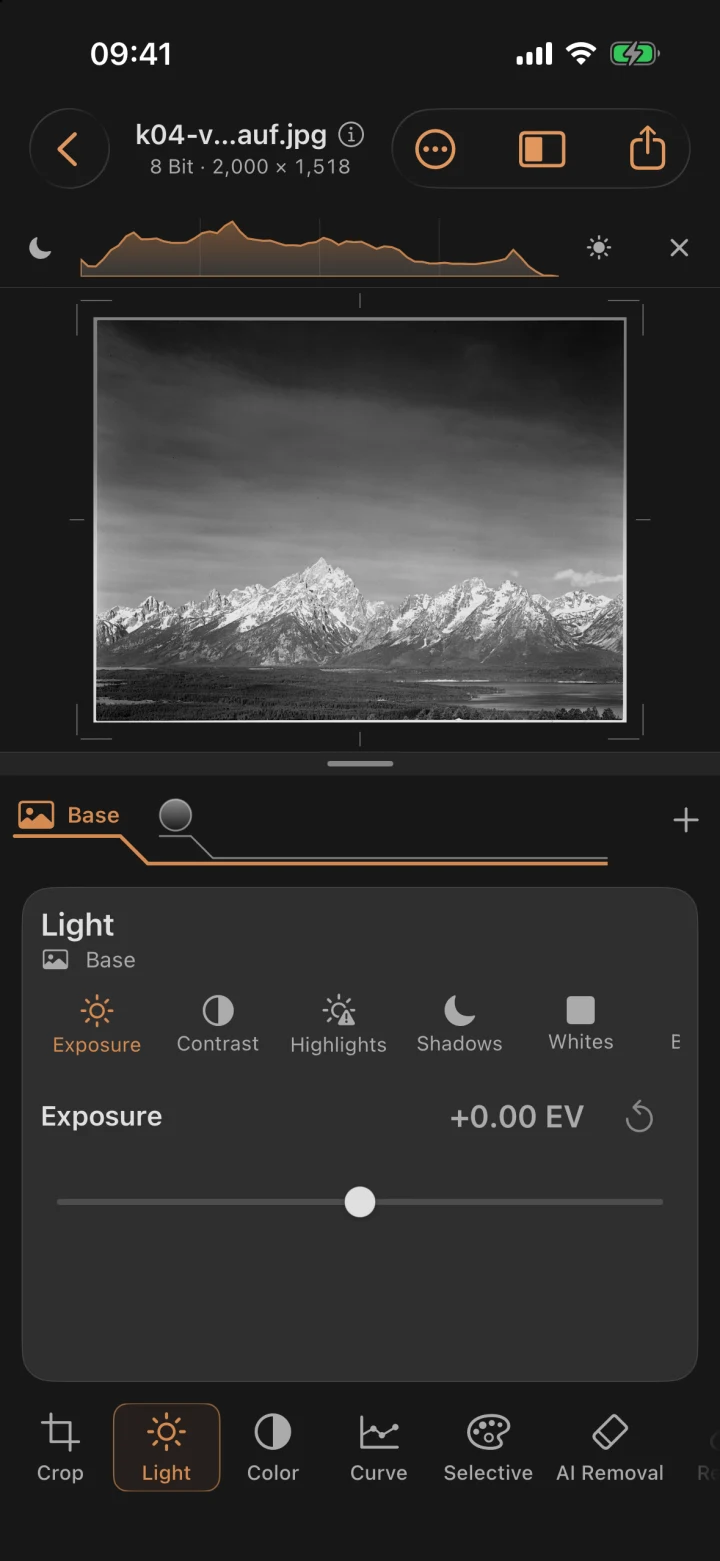
    Half dark glass, half clear: the graduated ND filter in front of the lens was landscape photography's insurance policy. Here it lives in the filter magazine.

    Graduated ND filter & burning in the sky
  5. Chapter 5

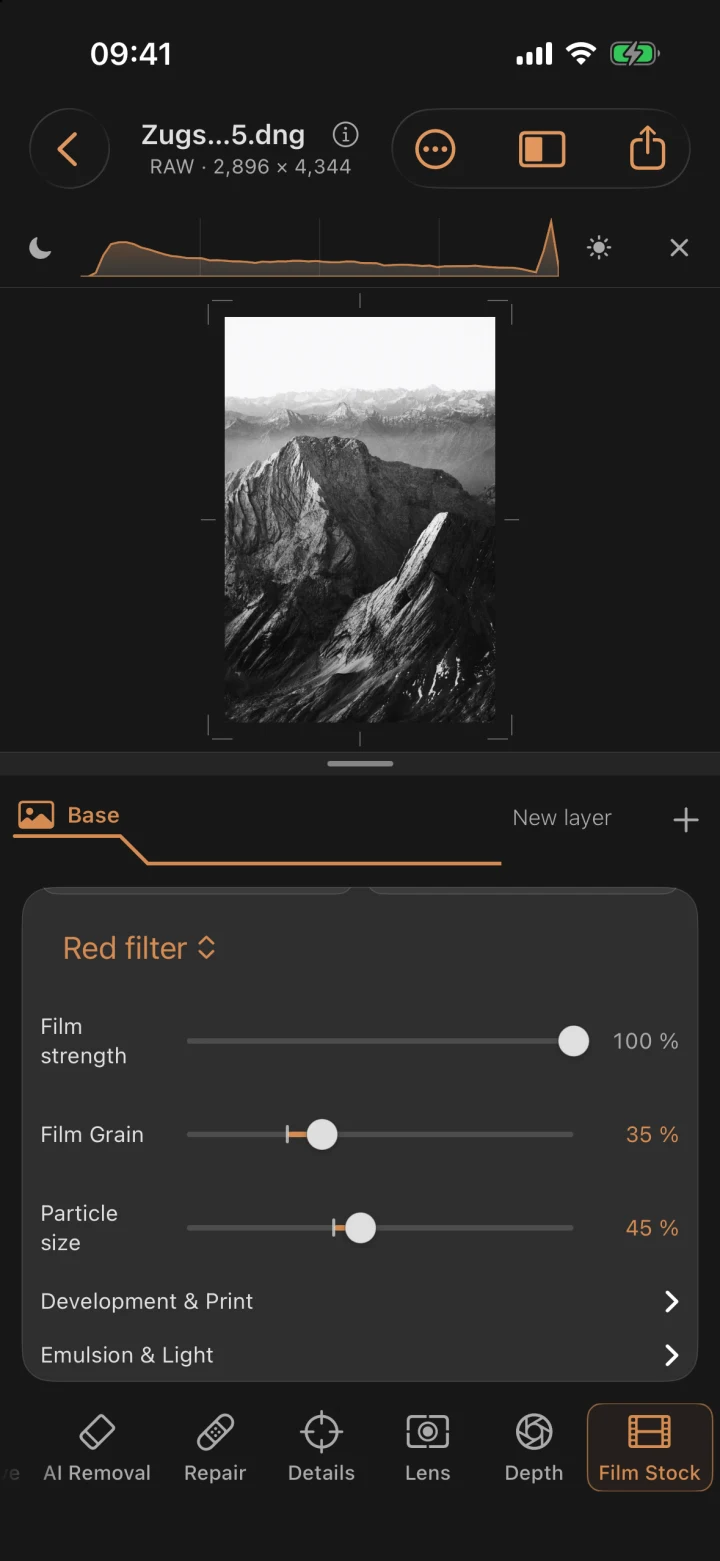
    Developing Black and White

    Which film was in the camera — and which filter was on the lens? Both decisions are yours again, digitally.

    Film choice & color filtration in front of the lens
  6. Chapter 6

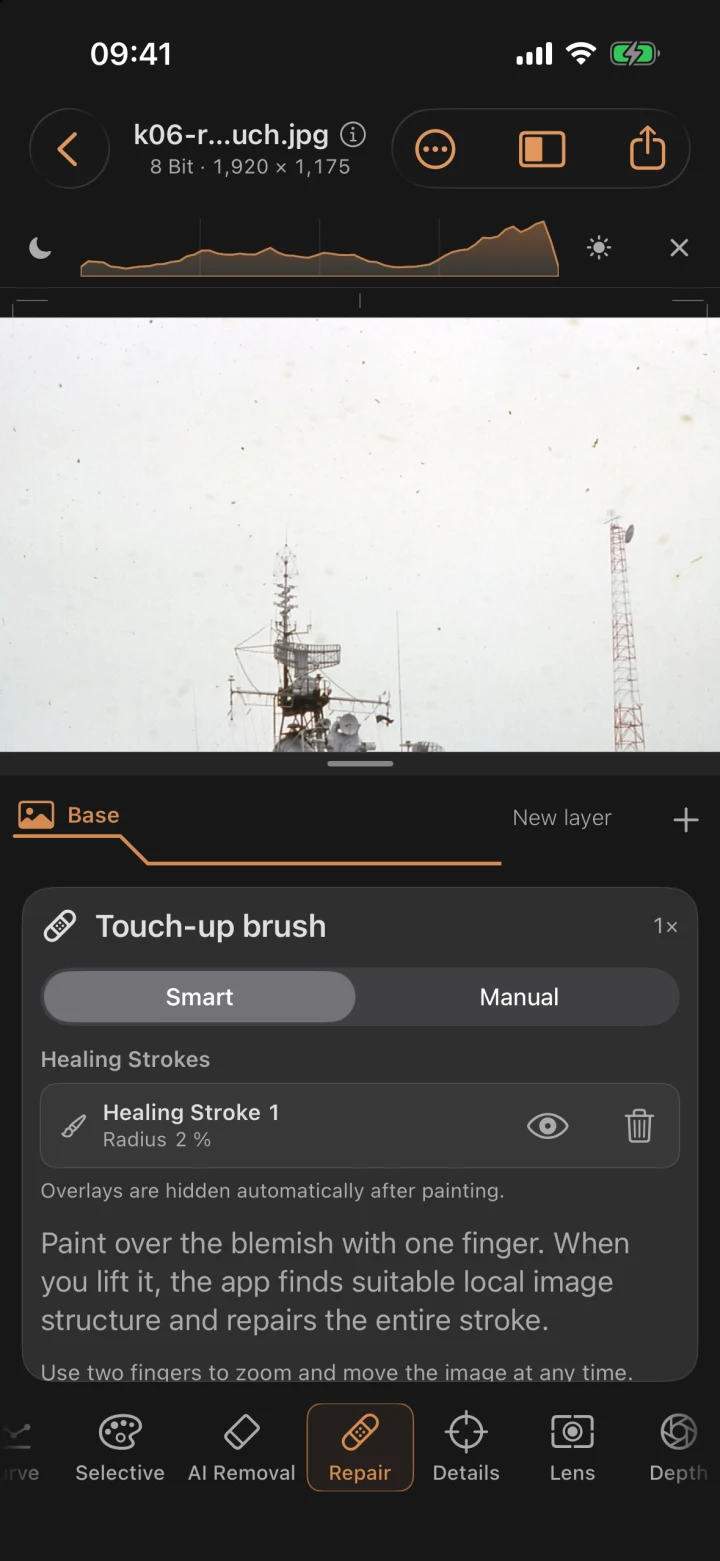
    Spotting

    A fine brush, spotting dye, a steady hand: spotting belonged to every print. Today a single fingertip does it.

    Spotting finished prints

  7. Chapter 7

    Toning

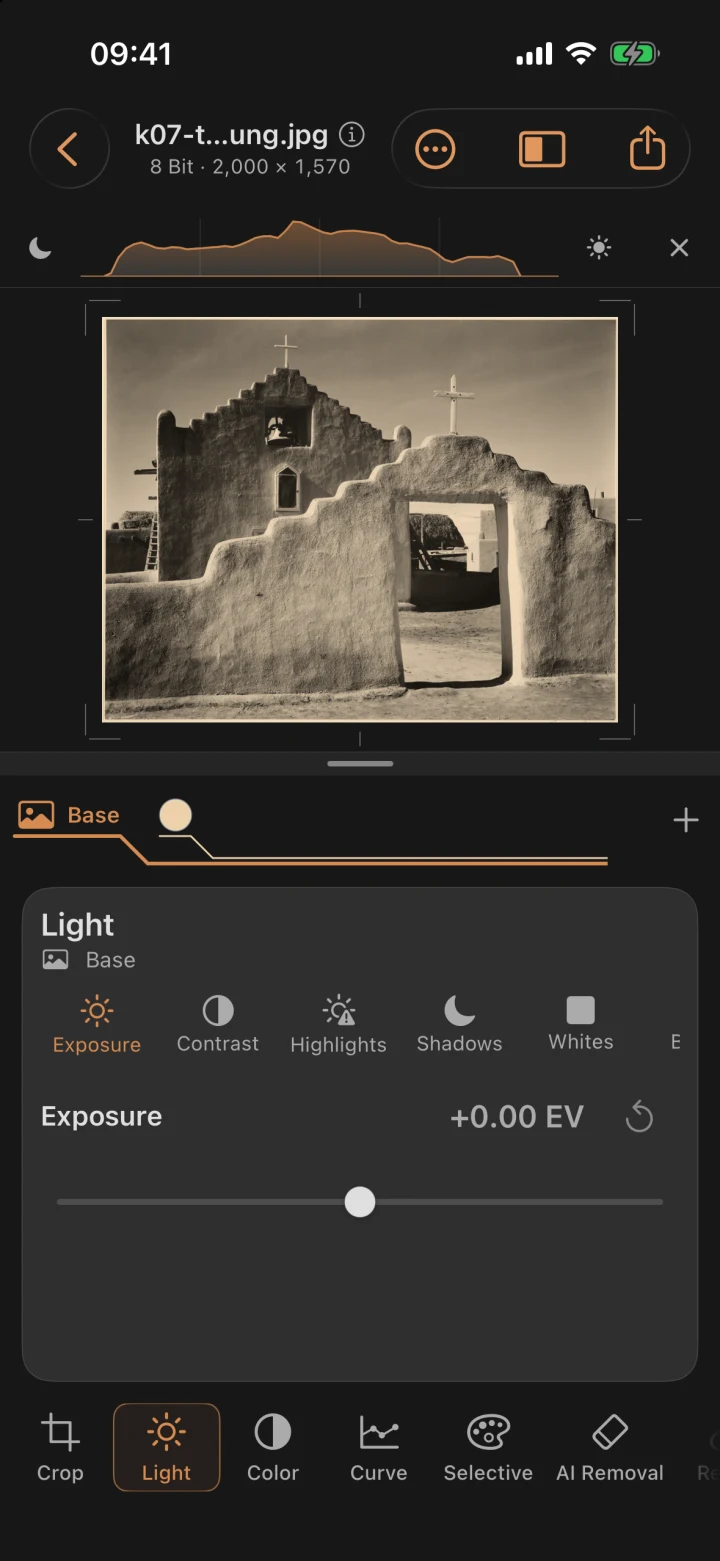
    Sepia wasn't a filter — it was a chemical bath. And warm tone was a paper stock. Both paths are here again.

    Sepia & warm toning

  8. Chapter 8

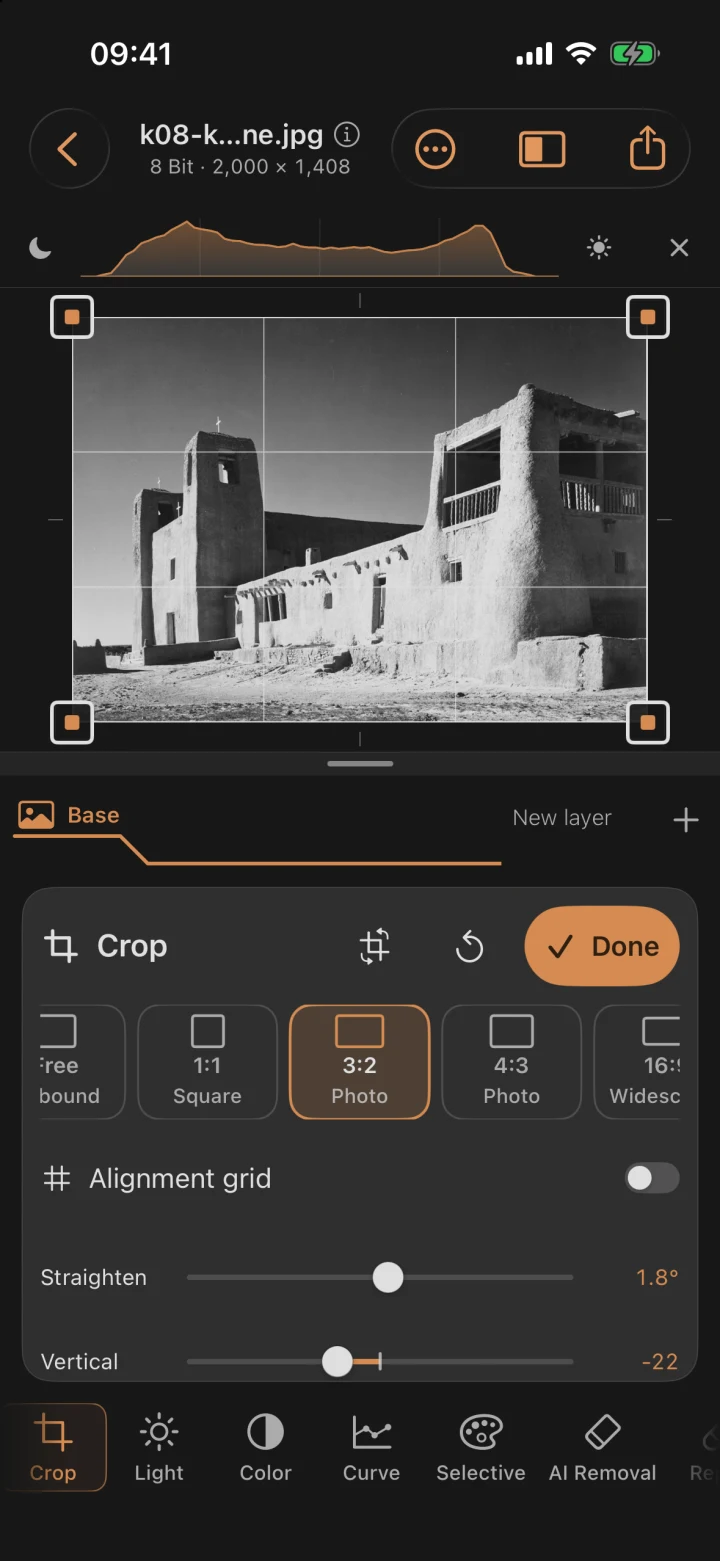
    The Crop

    The enlarging easel decided the frame, the view camera kept verticals straight. Both live inside Crop now.

    Enlarging easel & view-camera shift

  9. Chapter 9

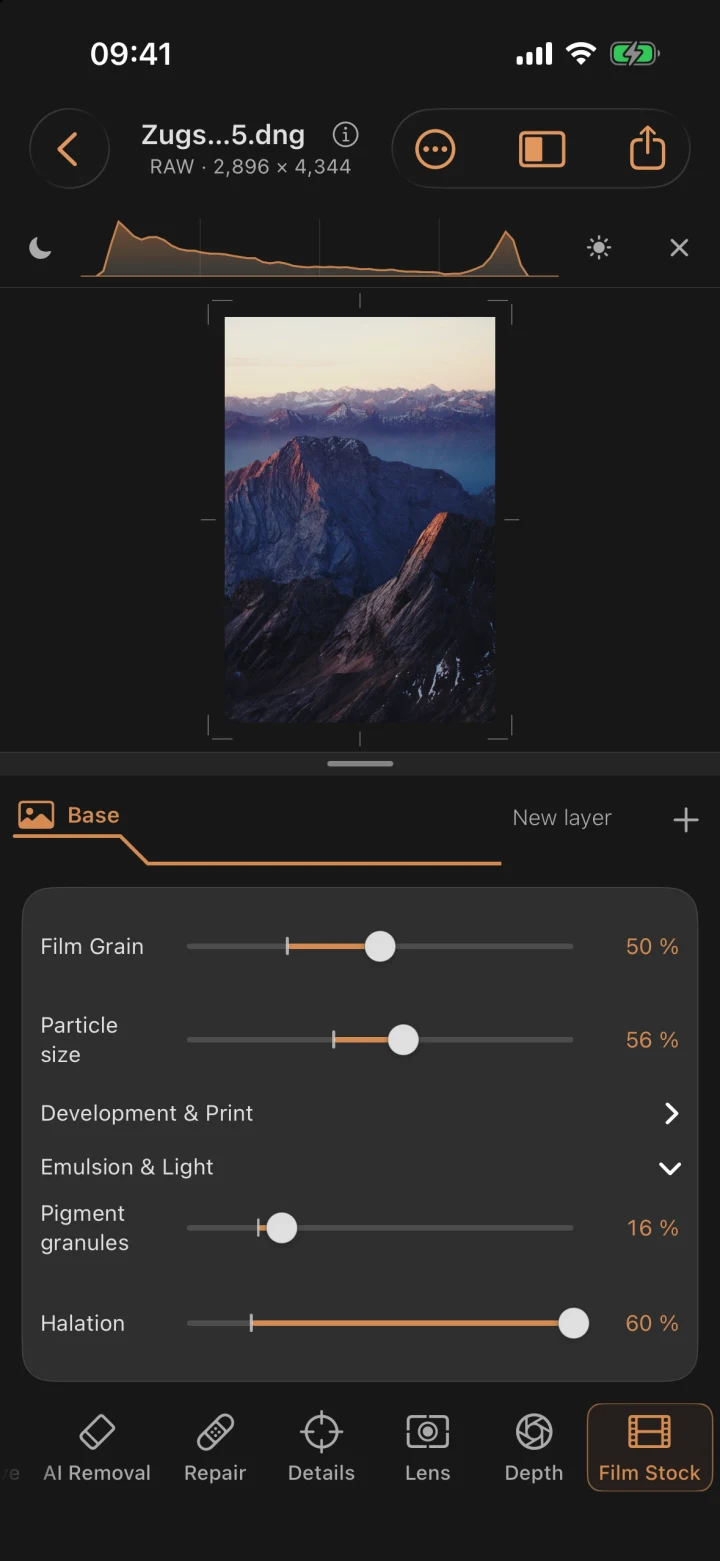
    Grain & Halation

    Grain was physics, halation was a flaw in construction — and both became the handwriting of film.

    Film character & halation

  10. Chapter 10

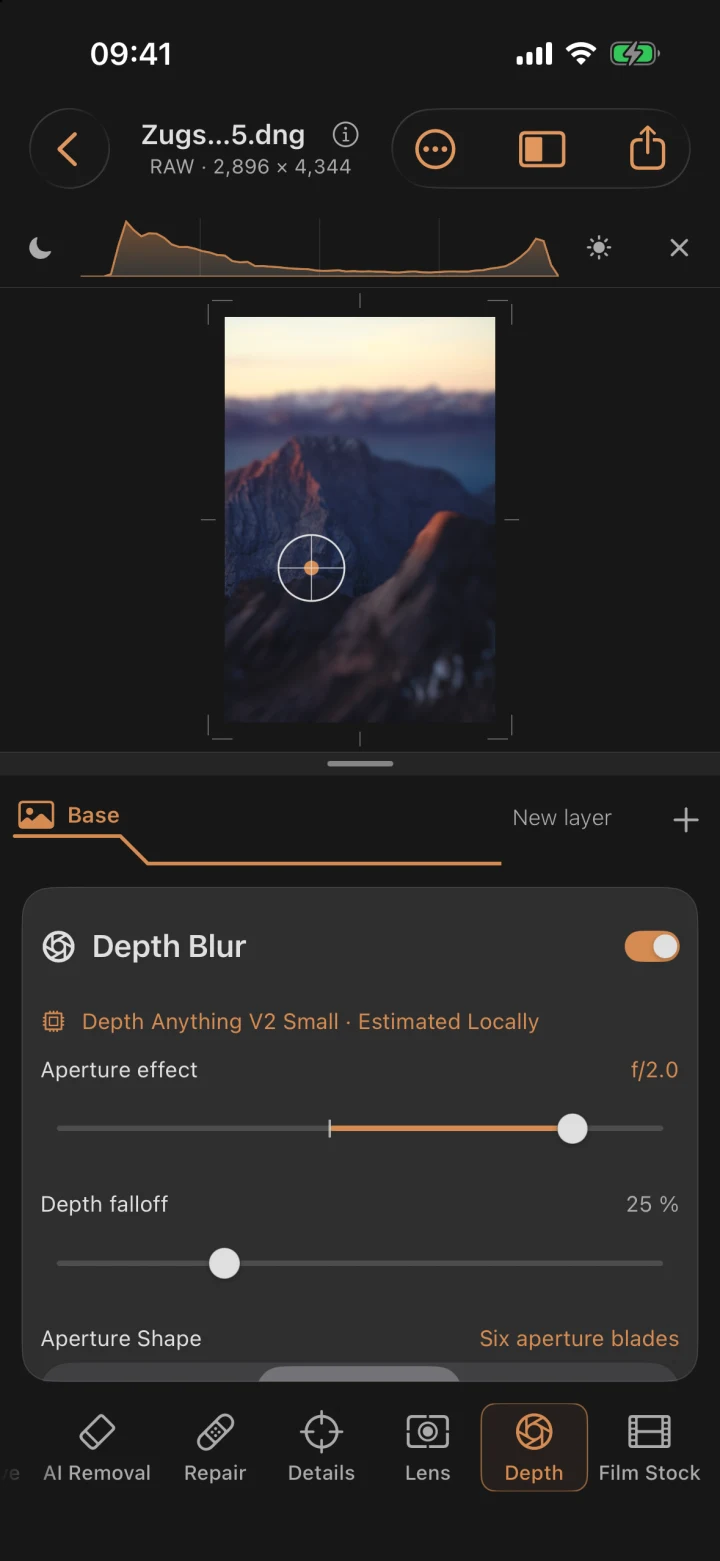
    Choosing Depth

    Adams' f/64 group wanted everything sharp — depth of field was sealed at the moment of exposure. This one privilege is new.

    Depth of field & lens character